
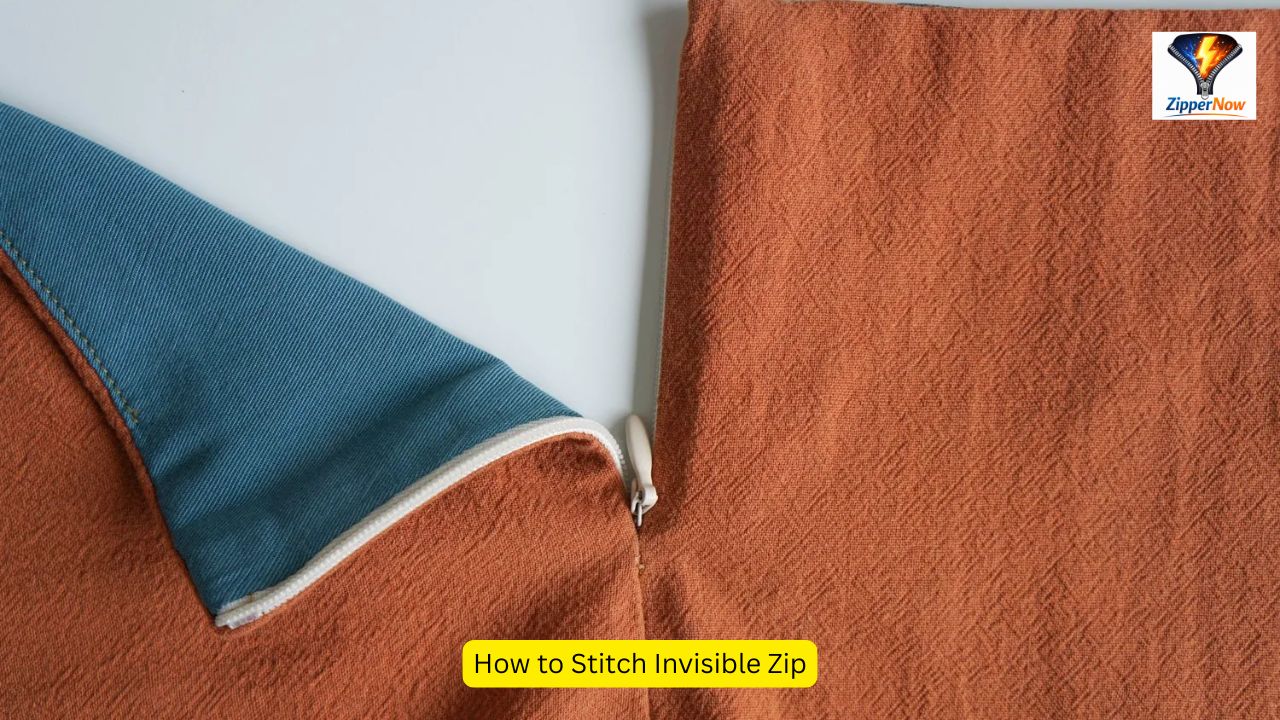
An invisible zip is exactly what it sounds like—a zipper designed so that the teeth are hidden within the seam of a garment. From the outside, all you see is a clean, smooth line. No bulky teeth. No obvious stitching. Just elegance.
Why Choose an Invisible Zip Over a Regular Zip?
Think of a regular zip as sneakers and an invisible zip as formal shoes. Both work, but invisible zips elevate the look. They’re perfect for dresses, skirts, blouses, and even cushion covers where aesthetics matter.
Tools and Materials You Will Need
Before you stitch, gather everything you need. Sewing without preparation is like cooking without ingredients—frustrating.
Essential Sewing Tools
- Sewing machine
- Invisible zipper foot
- Fabric scissors
- Pins or fabric clips
- Measuring tape
- Matching thread
- Iron and ironing board
Choosing the Right Invisible Zipper
Always choose a zipper slightly longer than your opening. You can trim extra length later, but a short zip is a deal-breaker.
Fabric Compatibility Tips
Lightweight fabrics love invisible zips. Heavier fabrics can still work, but stabilization is key—use interfacing if needed.
Preparing Before Stitching
This step separates clean results from messy ones.
Measuring the Zip Correctly
Measure the seam opening and ensure the zipper extends at least 2–3 cm beyond it. This gives you room to stitch comfortably.
Preparing the Fabric
Finish raw edges with a zigzag stitch or serger before inserting the zip. It prevents fraying later.
Pressing the Zip for Best Results
Gently press the zipper teeth outward using low heat. This helps the needle stitch closer to the teeth, making the zip truly invisible.
Understanding the Invisible Zipper Foot
What Is an Invisible Zipper Foot?
It’s a special sewing machine foot with grooves underneath that guide the zipper teeth away from the needle. This allows super-close stitching.
Can You Sew Without One?
Yes—but it’s harder. A regular zipper foot works in a pinch, but results may vary. For best results, invest in the proper foot.
Step-by-Step Guide on How to Stitch Invisible Zip
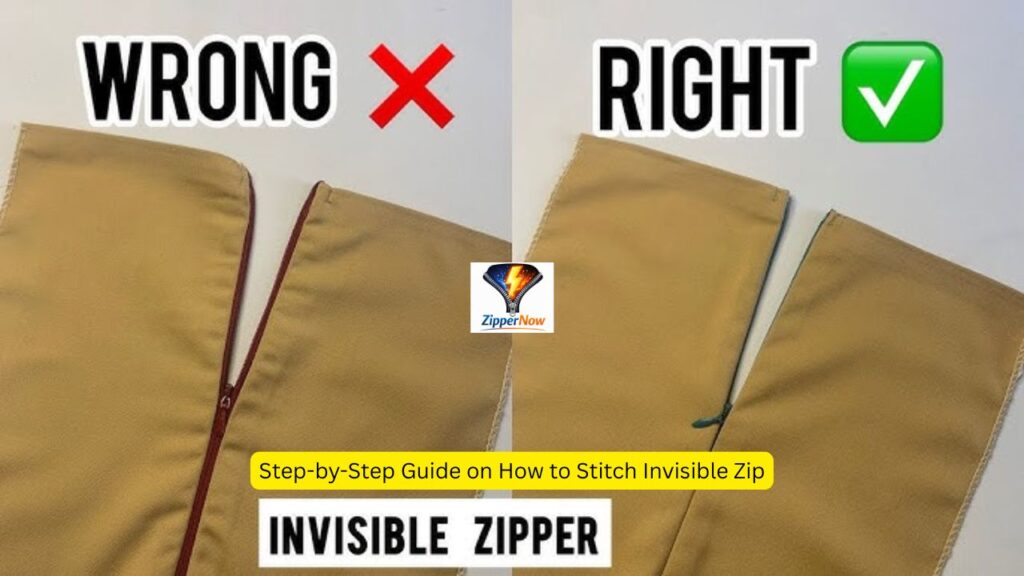
Now comes the fun part.
Step 1 – Marking the Seam Line
Mark the seam allowance on both sides of the fabric. This acts like a roadmap for perfect alignment.
Step 2 – Aligning the Zipper
Place the zipper face down on the right side of the fabric. Align the zipper teeth with the seam line. Pin carefully.
Step 3 – Stitching the First Side
Using the invisible zipper foot, stitch from top to bottom as close to the teeth as possible. Slow and steady wins here.
Step 4 – Stitching the Second Side
Repeat on the other side, ensuring the top edges match perfectly. This avoids uneven waistlines.
Closing the Seam Below the Zip
Switch to a regular presser foot. Stitch the seam below the zipper, starting just where the zipper stitching ends.
How to Stitch Invisible Zip by Hand
When Hand Stitching Makes Sense
If you don’t have a sewing machine or need a quick fix, hand stitching works well for light fabrics.
Simple Hand Sewing Technique
Use small backstitches close to the zipper teeth. Keep stitches tight and even for best invisibility.
Common Mistakes and How to Avoid Them
Wavy Zippers
Caused by stretching fabric while sewing. Let the machine feed the fabric naturally.
Visible Teeth After Stitching
This means you stitched too far from the teeth. Press and resew closer.
Misaligned Waistlines
Always mark alignment points before stitching. Pins are your best friends.
Tips for a Professional Finish
Pressing After Stitching
Press the seam lightly from the wrong side. Never press directly on plastic teeth.
Matching Thread and Fabric
A matching thread color is the secret weapon of invisible sewing.
Practicing on Scrap Fabric
Before sewing your actual garment, practice once. It saves heartbreak.
Invisible Zip for Different Garments
Dresses
Perfect for side seams and back closures.
Skirts
Invisible zips give skirts a seamless, boutique look.
Cushions and Home Décor
Yes, invisible zips work beautifully for pillow covers too.
Troubleshooting Invisible Zipper Problems
Zip Not Closing Smoothly
Check for fabric caught in stitches. A seam ripper can fix this easily.
Fabric Getting Caught
Stitch slightly away from the slider near the bottom.
Care and Maintenance
Washing Garments with Invisible Zips
Close the zipper before washing. Use gentle cycles.
Repairing a Loose Invisible Zip
Re-stitch only the loose area instead of replacing the entire zip.
Beginner vs Advanced Techniques
Basic Method
Perfectly fine for everyday sewing and learning.
Read also:-
Couture-Level Finish
Includes hand basting, interfacing, and ultra-close stitching.
Final Thoughts:-
Learning how to stitch an invisible zip is like learning to ride a bike. Awkward at first, smooth forever after. Once mastered, it opens doors to cleaner, more professional-looking garments. Practice a little, be patient, and soon it’ll feel second nature.
FAQs:-
1. Can beginners stitch an invisible zip?
Yes, absolutely. With practice and patience, beginners can master it quickly.
2. Do I need an invisible zipper foot?
It’s highly recommended but not mandatory.
3. Why does my invisible zip show after stitching?
You likely stitched too far from the teeth.
4. Can invisible zips be shortened?
Yes, simply stitch across the bottom and trim excess.
5. Which fabric is best for invisible zippers?
Cotton, satin, crepe, and lightweight fabrics work best.