Language is like a living organism. It grows, changes, and adapts with time. One of the most exciting parts of language is slang. Slang adds flavour, emotion, and personality to everyday conversations.
Why Slang Matters in Modern Communication
Slang helps people connect faster. It makes conversations feel relaxed and natural. When you use slang correctly, you sound more relatable and confident.
How Slang Evolves Over Time
Words don’t stay the same forever. Just as fashion trends come and go, slang comes and goes. Some words disappear, while others—like “zip”—manage to stick around.
Understanding the Word “Zip”
Before diving into slang, let’s understand where “zip” comes from.
Literal Meaning of Zip
Originally, “zip” referred to the sound made by something moving quickly, like a zipper or a flying object.
Example:
- “He zipped his jacket.”
- “The ball zipped past me.”
Transition from Literal to Slang
Over time, people started using “zip” in creative ways. It slowly moved from physical action to emotional and social expression.
What Does “Zip” Mean in Slang?
In slang, “zip” can have several meanings depending on context.
“Zip” as Nothing or Zero
This is the most common meaning.
Example:
- “I got zip from that job interview.”
(Meaning: I got nothing.)
“Zip” as Silence
Sometimes, “zip” means staying quiet.
Example:
- “About this topic, zip your mouth.”
(Meaning: Don’t say anything.)
“Zip” as Speed
It can also mean doing something fast.
Example:
- “Let’s zip to the store.”
(Meaning: Go quickly.)
Origins of “Zip” in Slang
Early Usage in English
The word “zip” has been around since the early 1900s. It was first used to describe fast movement and energetic sounds.
Influence of Pop Culture
Movies, TV shows, and music helped spread the slang meaning. When celebrities use words, people follow.
Different Contexts Where “Zip” Is Used
In Casual Conversations
Friends often use “zip” casually.
Example:
- “Any updates?”
- “Nah, zip.”
In Social Media
On platforms like Instagram and Twitter, “zip” is used to express disappointment or humor.
Example:
- “No likes today. Zip engagement.”
In Music and Movies
Lyrics and dialogues often use “zip” to sound natural and modern.
“Zip” in American vs British Slang
Regional Differences
In America, “zip” usually means “nothing.”
In the UK, it is more linked to “be quiet” or “fast.”
Cultural Impact
Cultural habits shape how people interpret slang. That’s why context matters.
Common Phrases Using “Zip”
Zip It
Meaning: Be quiet.
Example:
- “Hey, zip it!”
Zippo
Meaning: Nothing at all.
Example:
- “I know zippo about coding.”
Zip-Zilch
Meaning: Absolutely nothing.
Example:
- “He earned zip-zilch this month.”
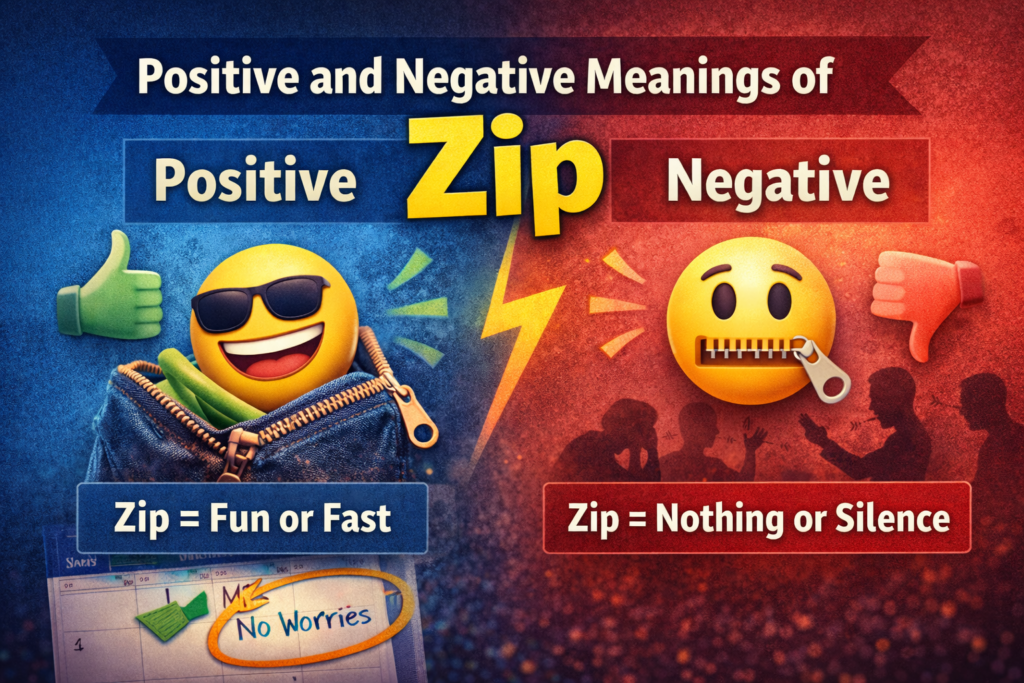
Positive and Negative Meanings of “Zip”
When “Zip” Sounds Cool
Used playfully, it sounds funny and light.
Example:
- “I’ve got zip worries.”
When “Zip” Sounds Rude
Saying “zip it” angrily can sound disrespectful.
Example:
- “Zip it, man!” (Can be offensive.)
How Young People Use “Zip” Today
Gen Z and Internet Culture
Gen Z loves short, expressive words. “Zip” fits perfectly because it’s simple and catchy.
Meme Language
Many memes use “zip” to show emptiness or failure.
Example:
- “My motivation today: zip.”
Examples of “Zip” in Real-Life Sentences
Daily Conversations
- “Did you save money?” – “Zip.”
- “Any messages?” – “Nope, zip.”
Online Chats
- “Any replies yet?”
- “Still zip.”
When You Should and Shouldn’t Use “Zip”
Informal Situations
Use it with friends, family, or online chats.
Professional Settings
Avoid it in formal emails, meetings, or reports. It may sound careless.
Instead of:
- “We got zip results.”
Say:
- “We received no results.”
Similar Slang Words to “Zip”
Nada
Means nothing (Spanish origin).
Zilch
Means zero.
Nothingburger
Means something unimportant.
All these words are cousins of “zip” in meaning.
Misunderstandings Around “Zip”
Cultural Confusion
Not everyone understands slang. Using “zip” with elders or foreigners may confuse them.
Context Matters
The same word can mean different things. Always check the situation.
Why “Zip” Remains Popular
Simplicity
It’s short, easy, and fun to say.
Expressiveness
One word can express disappointment, humor, or speed. That’s powerful.
The Future of “Zip” in Slang
Will It Survive?
Most likely, yes. “Zip” has already survived for decades.
New Variations
We may see new versions like “zip vibes” or “zip energy” in the future.
Benefits of Understanding Slang
Better Communication
Knowing slang helps you understand movies, memes, and chats better.
Social Connection
It makes you feel included and confident in conversations.
Conclusion:-
So, what is “zip” in slang? In simple words, it usually means “nothing,” “silence,” or “speed,” depending on how you use it. It’s a small word with big impact. Like a Swiss Army knife of language, “zip” fits into many situations. Whether you’re chatting with friends, scrolling social media, or watching movies, understanding this slang helps you stay connected and culturally aware. Mastering words like “zip” is like learninshortcuts in communication—it makes life smoother and more fun.
Frequently Askd Questions (FAQs)
1. Does “zip” always mean nothing?
No. It can also mean “be quiet” or “move fast,” depending on context.
2. Is “zip” rude to say?
Usually no, but “zip it” can sound rude if said angrily.
3. Can I use “zip” in formal writing?
No. It’s better for informal conversations only.
4. Is “zip” still popular today?
Yes, especially in online chats and youth culture.
5. What is the safest way to use “zip”?
Use it casually with friends and in relaxed settings.